

CG Policy · 2025
In this section7 topics
Corporate Governance Policy
Has a Corporate Governance Policy
Yes
Policy Description
The Board of Directors recognize the roles and responsibilities of managing the Company's business with good corporate governance, upholding equality, transparency, and accountability as key principles that strengthen the organization and personnel's development to accomplish sustainable business growth, create confidence among all stakeholders, and optimize benefits to the organization as a whole.
The Board of Directors is committed to conducting its duties with responsibility and integrity to ensure the best interests of the Company, its shareholders, and all stakeholders. The Company adheres to the principles of good corporate governance, emphasizing transparency, fairness, accountability, auditability, and stakeholder engagement. The Board believes that effective corporate governance strengthens stakeholder confidence, supports efficient and transparent management, enhances strategic decision-making, mitigates risks, and prevents misconduct, thereby enabling the Company to achieve sustainable long-term growth.
Corporate Governance and Business Ethics Policy Manual
The Board of Directors has established the Company’s policies on good corporate governance, business ethics and code of conduct, and anti-corruption measures. These policies are communicated to employees through internal email, the Company’s intranet, and the Company’s website under the “Corporate Governance” section. The Company regularly reviews and updates its policies to ensure compliance with applicable laws, regulatory requirements, and the evolving business environment.
The Company’s Corporate Governance Policy encompasses the key principles in accordance with the Corporate Governance Code (CG Code), as follows:
Rights and Equitable Treatment of Shareholders and various groups of Stakeholders.
Board Structure, Roles, Duties, Responsibilities, and Independence.
Transparency and Disclosure of Information.
Supervision of Subsidiaries and Associated Companies.
Controlling System and Risk Management.
Business Ethics and Anti-Corruption Practices
Review of Compliance with Corporate Governance Principles
The Audit and Corporate Governance Committee is responsible for reviewing the Company’s compliance with corporate governance principles on an annual basis and providing recommendations to the Board of Directors to enhance corporate governance standards. This process aims to ensure that the Company adheres to appropriate and effective corporate governance practices in line with established guidelines.
Throughout the past year, the Company has remained firmly committed to good corporate governance, as reflected in the following practices:
An appropriate board structure with a sufficient level of independence
Strong internal control systems and robust risk management practices
Transparent, timely, and verifiable disclosure of information
Responsible business operations toward shareholders, stakeholders, and society as a whole
Commitment to Corporate Governance and Sustainability
Strong corporate governance practices form a fundamental foundation for the Company’s long-term sustainability and for building confidence among shareholders, investors, and all stakeholder groups. The Company is committed to complying with Thailand’s Corporate Governance Code (CG Code 2017) by adopting governance principles that are appropriate to the nature and context of its business. This approach aims to enhance corporate governance standards and support the Company’s sustainable growth over the long term.
Policy Document Link
https://cnt.listedcompany.com/misc/CG/20240315-cnt-cg-policy-manual-en.pdf
Policy & Practices — Board of Directors
Has Policy & Guidelines for the Board
Yes
Board Guidelines
| Guideline | Other — Please Specify | Detail | Document Link |
|---|---|---|---|
| Nomination of Directors | The Nomination and Remuneration Committee is appointed by the Board of Directors to establish the criteria, procedures, and guidelines for the nomination and selection of directors, the Chief Executive Officer, and top executives. The nomination process is conducted in accordance with the principles of good corporate governance and the requirements of the Stock Exchange of Thailand, with due regard to transparency, independence, and auditability. The duties and responsibilities of the Nomination and Remuneration Committee include:
The nomination and selection process is properly documented in writing and conducted in a transparent manner. Relevant information may be disclosed in accordance with the disclosure requirements of the Company’s annual report and applicable regulations. Board Diversity Policy The Company places importance on board diversity as a key factor in enhancing the effectiveness of corporate governance and strategic decision-making. The Nomination and Remuneration Committee regularly reviews the composition of the Board to ensure alignment with the Company’s strategy, business environment, and stakeholder expectations. In the nomination and selection of directors, the Company adopts a comprehensive diversity approach, taking into consideration a broad range of factors, including knowledge, skills, and expertise in accordance with the Board Skill Matrix, relevant industry experience, gender, age, and maturity, diversity of perspectives and strategic thinking, independence qualifications in compliance with Stock Exchange of Thailand requirements, and the ability to dedicate sufficient time and perform duties effectively. The Board assesses skill gaps and additional required competencies to support the nomination of suitable candidates. This process aims to promote good corporate governance, enhance organizational value, and support a Board structure that is diverse, transparent, balanced, and effective. Succession Planning Policy The Board of Directors ensures that the Company has a clear and structured succession planning framework for key positions, including the Chief Executive Officer and other critical senior management roles, to ensure management continuity and mitigate organizational risks. The Nomination and Remuneration Committee is responsible for establishing the criteria and qualifications for succession candidates. Potential successors are identified from both internal and external sources and are assessed based on their skills, experience, leadership capabilities, and other essential attributes. Qualified candidates are then proposed to the Board of Directors for consideration. In addition, the Company provides development plans for high-potential executives to prepare them for future leadership roles. The succession plan is reviewed and assessed on a regular basis to ensure the long-term availability of suitable successors and the continued effectiveness of the Company’s leadership structure. Director Nomination and Appointment The Company conducts the nomination and appointment of directors based on the principles of transparency and independence, with due consideration given to board diversity and board skill matrix to ensure alignment with the Company’s business direction, risk profile, and sustainability objectives. The Nomination and Remuneration Committee is responsible for establishing nomination criteria and evaluating candidates’ qualifications and competencies prior to proposing suitable candidates to the Board of Directors. Director nominees are subsequently submitted to shareholders for approval in accordance with applicable regulations Criteria for Director Candidates
Nomination and Appointment of the Chief Executive Officer and Top Executives The Nomination and Remuneration Committee is responsible for the selection and proposal for the appointment of the Chief Executive Officer and top executives, based on the principles of transparency, fairness, and consideration of the best interests of the Company. Criteria for the Nomination and Appointment of the Chief Executive Officer and Senior Executives The Nomination and Remuneration Committee establishes the following criteria for consideration:
Nomination and Appointment Process for Directors, Chief Executive Officer, and Top Executives The Company follows a systematic, transparent, and auditable process for the nomination and appointment of directors, the Chief Executive Officer, and top executives, as outlined below:
| ||
| Determination of Director Remuneration | Determination of Remuneration for Directors, Chief Executive Officer, and Top Executives Directors’ Remuneration The Board of Directors has delegated the Nomination and Remuneration Committee to establish the policy, criteria, and procedures for determining the remuneration of directors and senior executives. The remuneration determination process is conducted in accordance with the principles of transparency and auditability, and is benchmarked against remuneration practices of comparable listed companies and peers within the construction industry. The remuneration structure is designed to be appropriate and commensurate with the roles, duties, responsibilities, and performance of directors, in order to support effective corporate governance and align with the Company’s long-term interests. Criteria for Determining Directors’ Remuneration The Nomination and Remuneration Committee determines directors’ remuneration based on the following principles:
Remuneration of the Chief Executive Officer and Top Executives The Nomination and Remuneration Committee determines the remuneration of the Chief Executive Officer and top executives to ensure that it is appropriate, aligned with their roles and responsibilities, and capable of attracting and retaining high-potential executives in a competitive labor market. The remuneration framework is established in accordance with principles of transparency, fairness, and compliance with applicable laws and regulations. Executive remuneration is linked to the following performance factors:
The remuneration of each executive is reviewed and proposed by the respective supervisor. Executives are not permitted to participate in the determination of their own remuneration, in order to ensure fairness and avoid conflicts of interest. Components of Remuneration for the Chief Executive Officer and /Top Executives The remuneration of the Chief Executive Officer and top executives comprises fixed salary, annual performance-based bonuses, and benefits and welfare, such as provident fund contributions (on a voluntary basis), medical benefits, life and accident insurance, and other employee welfare benefits in line with those provided to employees of the Company. Details of executive remuneration are disclosed in Section 7.4.2 “Policy on Remuneration of Executive Directors and Top Executives” of the Company’s Form 56-1 One Report. | https://cnt.listedcompany.com/misc/CG/20240315-cnt-cg-policy-manual-en.pdf | |
| Independence of the Board of Directors from the Management | Separation of Roles between the Board of Directors and Management The Company conducts its corporate governance in accordance with good governance principles by clearly separating the roles, duties, and responsibilities of the Board of Directors and management. This clear delineation ensures an appropriate balance between strategic direction and operational management, and serves as a mechanism to prevent conflicts of interest. Role Segregation
The Company recognizes that combining the roles of Chairman of the Board and Chief Executive Officer may give rise to governance risks and potential conflicts of interest. Accordingly, the Company has established a policy requiring that the positions of Chairman of the Board and Chief Executive Officer be held by separate individuals. Measures to Strengthen the Independence of the Board of Directors To ensure that the Board of Directors performs its duties independently from management, the Company has established the following measures:
The clear governance structure and effective separation of roles enhance transparency in the Board’s decision-making process, reduce the risk of conflicts of interest, and enable management to operate with agility while maintaining effective oversight. These measures help build confidence among shareholders and stakeholders in the Company’s corporate governance framework. | https://cnt.listedcompany.com/misc/CG/20240315-cnt-cg-policy-manual-en.pdf | |
| Director Development | Director and Executive Development The Company places strong emphasis on the continuous development of directors and top executives to enhance their capabilities in performing governance and management duties effectively, and to ensure readiness to respond to changes in the business environment, economic conditions, technological developments, and applicable regulatory requirements. Orientation Program for New Directors For newly appointed directors following approval by shareholders, to ensure that new directors gain a comprehensive and timely understanding of their roles, duties, responsibilities, and the Company’s business context, the Company Secretary is responsible for preparing orientation materials, but is not limited to, the following documents and information: Directors’ Handbook, Corporate and company registration information, Good Corporate Governance Policy, Business Ethics and Code of Conduct, Anti-Corruption Policy and related guidelines, Regulations governing trading of the Company’s securities, Previous Board meeting minutes and Other relevant key policies. | https://cnt.listedcompany.com/misc/CG/20240315-cnt-cg-policy-manual-en.pdf | |
| Board Performance Evaluation | Self-Assessment of the Board of Directors and Board Committees The Company conducts an annual performance evaluation of the Board of Directors and Board committees to ensure that corporate governance is carried out effectively, transparently, and in accordance with good corporate governance principles. The evaluation process is aligned with the guidelines of the Thai Institute of Directors (IOD) and complies with the requirements of the Securities and Exchange Commission and the Stock Exchange of Thailand. The performance evaluation serves as an important tool for reviewing directors’ performance, assessing the appropriateness of the Board’s structure and composition, identifying strengths and areas for improvement, and supporting the development planning of the Board and Board committees for the subsequent year. The Company Secretary reports the evaluation results to the Board of Directors and discloses relevant information in the Company’s Corporate Governance Report as part of the annual report. | https://cnt.listedcompany.com/misc/CG/20240315-cnt-cg-policy-manual-en.pdf | |
| Corporate Governance of Subsidiaries and Associated Companies | The Company’s Corporate Governance Policy, Code of Business Conduct and Practices, as well as other corporate policies, are applicable to the Company’s subsidiaries and associated companies1 (as appropriate), in order to ensure that all business units of the Company, regardless of their location, comply with these policies in a consistent manner. The Company oversees and ensures that all of its subsidiaries and associated companies comply with applicable laws and regulations. The Board of Directors has established the following mechanisms to supervise and oversee corporate governance practices of the Company’s subsidiaries and associated companies.
1 “associated company” means: (a) a company whose shares are held by the parent company or the subsidiary company in an aggregate number of more than twenty percent but not exceeding fifty percent of the total number of shares with voting rights of the company being held; (b) a company in which the parent company or the subsidiary company has power to participate in making decisions on financial policies and operational matters of the company but not insomuch as to have control over such policies and not deemed as subsidiary company or joint venture. | https://cnt.listedcompany.com/misc/CG/20240315-cnt-cg-policy-manual-en.pdf | |
| Other guidelines regarding the board of directors | Other Practices Relating to the Board of Directors | Board Committees The Board of Directors has established several board committees as part of the Company’s good corporate governance framework, namely the Audit and Corporate Governance Committee, the Executive Committee, the Sustainability and Risk Management Committee, and the Nomination and Remuneration Committee. The Audit and Corporate Governance Committee comprises entirely independent directors. Details of each board committee, including the names, number of members, qualifications, roles, duties, and responsibilities, are disclosed on the Company’s website and under the section titled “Corporate Governance Structure.” | https://cnt.listedcompany.com/misc/CG/20240315-cnt-cg-policy-manual-en.pdf |
Policy & Practices — Shareholders and Stakeholders
Introduction
The Company places importance on the rights of all stakeholder groups, including internal stakeholders such as directors, employees, and executives of the Company and its subsidiaries, as well as external stakeholders such as shareholders, creditors, business partners, customers, communities and society, government authorities, and relevant agencies. The Company recognizes that support from all stakeholders is a key factor in enhancing competitiveness, generating profitability, and driving the Company’s long-term success.
The Company regularly reviews and updates its policies and practices toward stakeholders as set out in the Business Ethics and Code of Conduct Manual. In addition, the Company has established communication and complaint-handling channels that allow stakeholders to submit complaints directly to the Chairman of the Board, who is an independent director, without having to go through management. This arrangement is intended to prevent conflicts of interest and to ensure that all complaints are handled fairly and with strict confidentiality.
Upon receipt of a complaint, and where the matter is found to have merit, the Company will conduct an appropriate investigation and propose corrective measures to the Board of Directors, as well as monitor the implementation of such measures to ensure timely and appropriate resolution. These practices are designed to strengthen trust between the Company and its stakeholders and to enhance the Company’s overall sustainability standards.
Further details on stakeholder engagement are disclosed under Section 3.2.2 “Stakeholder Analysis in the Business Value Chain.”
Has Policy & Guidelines for Shareholders and Stakeholders
Yes
Shareholder & Stakeholder Guidelines
| Guideline | Other — Please Specify | Detail | Document Link |
|---|---|---|---|
| Shareholder | Shareholders’ Rights and Equitable Treatment of Shareholders The Company places strong emphasis on respecting and protecting the rights of all shareholders on an equitable basis. Shareholders are encouraged to participate in decision-making on significant matters and to express their opinions freely. The Company ensures that material information is disclosed to shareholders in an accurate, sufficient, transparent, and verifiable manner. In addition, the Company provides appropriate care and facilitation to enable shareholders to fully and effectively exercise their rights. Some of the policies and procedures followed to protect the rights of the Company’s shareholders are as follows: Appointment of Board members The Company regularly updates the information pertaining to candidates’ and existing Directors’ profiles so that all stakeholders can make informed decisions regarding their appointment. This information is included in the Company’s Annual Report and is also presented to the Company’s shareholders during the Annual General Meeting of Shareholders (“AGM”). The information is provided to ensure that the Company’s shareholders have access to accurate, complete, relevant, and necessary details for making informed decisions about appointments. It includes the following:
Consideration of the policy on Directors’ remunerationThe Company follows the policy of obtaining the approval of the policy on Directors’ remuneration from the shareholders in the AGM and has also disclosed guidelines/procedures for determining Directors’ remuneration in the ‘Corporate Governance Policy’ of this report. Appointment of AuditorsThe Company follows the policy of obtaining the approval of appointment of auditors from the shareholders in the AGM and has improved the information disclosure for the correctness and completeness of the information required for the decision on the appointment of auditors. The information provided in the AGM includes details as follows:
Consideration of the dividend policyPresently, the Company’s dividend policy remains unchanged. However, any future changes will be subject to approval from the shareholders.In addition to these fundamental rights, shareholders are entitled to receive complete and timely information on the Company’s operating performance, communications from management, and other material information through the Company’s website. The Company conducts its business with a strong commitment to protecting shareholders’ rights and encouraging all shareholders to fully exercise their rights. Policies relating to the protection of shareholders’ rights are set out in the Corporate Governance Policy Manual, which is publicly disclosed on the Company’s website to ensure transparency and accessibility. Facilitation of Shareholders’ Participation in the Annual General Meeting The Board of Directors respects shareholders’ rights and facilitates shareholders’ participation in the Annual General Meeting of Shareholders (AGM) through the following practices:
The Company treats all shareholders-major and minority shareholders, institutional investors, and foreign shareholders-fairly and equitably. The Board of Directors ensures that shareholders’ rights are adequately protected and that all shareholders receive fair treatment in accordance with good corporate governance principles. Shareholders’ MeetingsIn 2025, the Company held one shareholders’ meeting, namely the 92nd Annual General Meeting of Shareholders, on 23 April 2025. The Board of Directors resolved to convene the meeting via electronic means. The electronic meeting was conducted in compliance with applicable laws and regulations, including the Emergency Decree on Electronic Meetings B.E. 2563 (2020), the Notification of the Ministry of Digital Economy and Society regarding Security Standards for Electronic Meetings B.E. 2563 (2020), as well as relevant system security and meeting control standards, to ensure that the meeting was conducted lawfully, transparently, and efficiently. The Company facilitated and encouraged broad shareholder participation by providing a user manual for attending the meeting, which outlined procedures for meeting attendance, voting, and question-and-answer sessions for each agenda item. The manual was distributed to shareholders in advance and was also made available on the Company’s website to ensure convenient and equitable access to information. The Board of Directors places the highest importance on attendance at the Annual General Meeting of Shareholders. In 2025, all 10 directors attended the meeting, representing 100% attendance, including the Chairman of the Board, chairpersons of all Board committees, members of the Audit and Corporate Governance Committee, and independent directors. In addition, the external auditor attended the meeting to respond to questions relating to accounting and audit matters, and the Company’s legal advisor attended the meeting as a witness to the vote-counting process. In organizing shareholders’ meetings, the Company strictly adheres to the recommendations and guidelines of the Stock Exchange of Thailand and the Securities and Exchange Commission. The Company follows prescribed best practices to ensure transparency, auditability, and the full protection of shareholders’ rights. Prior to the 2025 Annual General Meeting of Shareholders Before the 2025 Annual General Meeting of Shareholders (AGM), the Company implemented the following practices to promote shareholder participation, transparency, and equitable treatment:
Practices on the Day of the Annual General Meeting of Shareholders On the day of the Annual General Meeting of Shareholders (AGM), the Company implemented the following practices to ensure transparency, fairness, and effective shareholder participation:
Notification of Voting Procedures, Vote Counting, and Opportunities for Shareholders to Ask Questions and Express Opinions Prior to the commencement of the Annual General Meeting of Shareholders, the Chairman of the Board, in his capacity as Chairman of the Meeting, assigned the Company Secretary to explain the voting procedures, the use of voting cards, the vote-counting process, and the disclosure of voting results for each agenda item. This was conducted to ensure transparency and auditability, and to clearly inform shareholders of their rights to ask questions and express opinions on every agenda item. At the meeting, shareholders and proxy holders representing 753,675,558 shares, or 73.3216% of the total paid-up shares, were present. The meeting was conducted strictly in accordance with the agenda previously notified to shareholders, with no additional agenda items introduced. All agenda items were approved in accordance with applicable legal requirements. Throughout the meeting, the Chairman allocated adequate time for shareholders to raise questions and express their views. Members of the Board of Directors, the Audit Committee, and the Executive Committee jointly provided comprehensive, clear, and sufficient explanations on all agenda items. This approach was intended to support the equitable and transparent exercise of shareholders’ rights in line with the principles of good corporate governance. Recording of Shareholders’ Meeting Minutes The Company recorded the explanation of voting procedures and the vote - counting process, which the Chairman of the Meeting assigned the Company Secretary to present to shareholders prior to the commencement of the meeting. The minutes also include the names and positions of directors attending the meeting, representatives of the external auditor, legal advisors, questions raised, responses provided, and resolutions passed for each agenda item. Detailed written records of the number of votes in favor, against, abstentions, and invalid ballots were prepared to enable shareholders who did not attend the meeting to review and verify the proceedings. The Company prepares accurate, complete, and clear minutes of shareholders’ meetings. The minutes include, among others, the names of directors attending the meeting and their attendance ratios, voting and vote-counting procedures, the required number of votes and voting results for each agenda item, as well as the questions raised and responses provided during the shareholders’ meeting. Disclosure of Shareholders’ Meeting Resolutions The Company disclosed the resolutions of the shareholders’ meeting together with the voting results for each agenda item on the same day as the meeting. Such disclosure was made through a news release to the Stock Exchange of Thailand and was also published on the Company’s website under the “Investor Relations” section. In addition, the Company prepared the minutes of the shareholders’ meeting, which accurately and completely recorded the resolutions and key matters discussed at the meeting. The minutes were submitted to the Stock Exchange of Thailand and published on the Company’s website under the “Investor Relations” section within 14 days from the date of the shareholders’ meeting. Equitable Treatment of Shareholders The Company places great importance on the fair and equitable treatment of all shareholder groups, including major and minority shareholders, Thai and foreign shareholders, and institutional investors. Such treatment applies to the convening of meetings, the conduct of shareholders’ meetings, and the protection of shareholders’ rights in relation to significant matters. The Company’s practices include the following:
Strictly enforcing measures to prevent the misuse of inside information, as stipulated in the Business Ethics Policy (Section 6.2 of the Annual Report), and confirming that there have been no cases of insider trading by directors or executives. | https://cnt.listedcompany.com/misc/CG/20240315-cnt-cg-policy-manual-en.pdf | |
| Employee | The Company recognizes that employees are one of the key success factors of the organization and are primary stakeholders who play a direct role in enhancing competitiveness, driving growth, and supporting sustainable business operations. Accordingly, the Company is committed to creating a transparent, fair, safe, and supportive working environment that fosters professional development and career advancement. The Company treats all employees equally and without discrimination on the basis of gender, age, race, religion, nationality, political beliefs, or any other personal background. Human resource policies are established in compliance with applicable labor laws and regulations, and are grounded in the principles of good corporate governance, human rights, diversity, and equality. The Company places emphasis on developing employee capabilities by enhancing knowledge, skills, and competencies necessary for business operations. Employees are encouraged to understand relevant standards and operational practices to keep pace with industry developments and to create value for the Company. In addition, the Company supports the employment of persons with disabilities, promotes equal opportunity, and fosters an inclusive corporate culture that encourages participation and engagement among employees at all levels. Furthermore, the Company has established a Diversity and Equality Policy under the Business Ethics and Code of Conduct Manual to ensure that employees and job applicants are treated fairly, consistently, and with respect throughout the employment lifecycle. Employment Policy The Company establishes its employment practices based on the principles of transparency, fairness, and auditability. Equal employment opportunities are provided without discrimination, and recruitment and selection are conducted based on competency, capability, and suitability for each position. The Company supports job security and clear career progression, strictly complies with labor and employment protection laws, and promotes the employment of persons with disabilities in accordance with applicable regulations. In addition, the Company emphasizes occupational health and safety in line with industry standards. Remuneration Policy The Company adopts a remuneration policy that is fair, transparent, and aligned with employees’ knowledge, capabilities, roles, responsibilities, and performance. Remuneration is linked to both short-term and long-term Company performance and is designed to remain competitive in comparison with peers within the same industry. Remuneration considerations take into account the Company’s profitability, individual performance evaluation based on key performance indicators (KPIs), and the level of responsibility associated with each position. With respect to long-term incentive schemes that provide employee benefits, such as an Employee Stock Ownership Plan (ESOP), the Company was not able to implement such schemes during the year, as several factors require further careful consideration prior to adoption. Remuneration Structure The Company’s remuneration structure comprises the following components:
Employee Welfare Committee The Company has established a Workplace Welfare Committee comprising seven employee representatives from various departments. The committee is responsible for overseeing employee welfare matters, consulting with management, and providing recommendations to enhance welfare benefits in line with employees’ needs and the Company’s operational context. Policy on Employee Knowledge and Capability Development The Company has established a policy to develop employees’ knowledge, capabilities, and professional expertise necessary for performing their duties in accordance with applicable standards. This policy aims to enhance work efficiency and ensure alignment with business requirements. The Company also supports continuous skills and capability development to keep pace with industry changes, accommodate the Company’s growth, and promote individual career advancement. The Company provides both internal and external training programs for employees at the head office and construction sites, as appropriate to job functions and professional disciplines. All related training expenses are borne by the Company. For employees who wish to pursue higher levels of education, the Company allows special leave and flexible working arrangements as necessary to support their studies. In addition, the Company encourages activities that foster positive relationships among employees and between employees and management, with the objective of promoting a healthy working environment, collaboration, and organizational cohesion. Further details on employee policies, training programs, and related performance outcomes are disclosed in the Social Performance Report, Section 3.4.2 Social Performance, of the Company’s Annual Report. Occupational Health and Safety Policy The Company has established an occupational health, safety, and working environment policy to ensure that all employees perform their duties in a safe and healthy workplace. The Company adopts modern and internationally recognized occupational health and safety management systems to prevent workplace accidents, occupational illnesses, and potential losses, while continuously promoting employees’ health and well-being. The Company has implemented the ISO 45001:2018 Occupational Health and Safety Management System across its office premises and all construction sites to ensure that operations comply with applicable standards and best practices. In 2025, the Company reported no work-related accidents, lost-time injury rates, or occupational illnesses resulting in work stoppage. Further details on the Company’s occupational health and safety policies and practices are disclosed in the Environmental and Social Performance Report, Section 3.4.2 Social Performance, of the Company’s Annual Report. | https://cnt.listedcompany.com/misc/CG/20240315-cnt-cg-policy-manual-en.pdf | |
| Customer | The Company recognises the importance of its customers, who are integral to the success of its business. The Company is committed to delivering the highest quality of work and services, ensuring that all projects are completed within agreed construction periods, comply with customer specifications, and meet stringent quality standards.
| ||
| Business competitor | The Company operates in accordance with the principles of fair trade. It does not engage in activities that undermine competitors’ reputations through false allegations, nor does it access competitors’ confidential information or employ dishonest or inappropriate means for any purpose. | ||
| Business partner | The Company recognises the importance of maintaining fair and transparent relationships with suppliers and subcontractors by providing equal access to information and applying terms and conditions based on industry norms, which are strictly adhered to once agreed. The Company does not request any non-contractual benefits, safeguards the confidentiality of suppliers’ and subcontractors’ information, and ensures that such information is not used for any inappropriate purposes. | ||
| Creditor | The Company recognises financial creditors as a key contributor to its success by providing funding and financing facilities essential for its working capital-intensive operations. The Company strictly complies with all terms and conditions of its borrowings, including the intended use of funds, repayment schedules, collateral requirements, and other agreed covenants, and proactively engages with lenders to seek waivers or mutually acceptable solutions should any potential non-compliance be anticipated. | ||
| Government agency | The construction business is subject to numerous laws and regulations. The Company recognises the importance of compliance with these laws and regulations and has incorporated compliance reviews as one of the key responsibilities of the Internal Audit Department, which is led by a qualified Head of Internal Audit.
| ||
| Community and society | The Company recognises its responsibility to the community and actively participates in supporting community activities. It is attentive to the impact of its actions and strives to embrace social accountability, going beyond the requirements of relevant laws.
Environment
| ||
| Other guidelines regarding shareholders and stakeholders | Disclosure and Transparency | The Company has strengthened its procedures to ensure the proper handling of important information for disclosure, including both financial and non-financial statements and reports. This information is disclosed accurately, transparently, and in a timely manner through appropriate channels that users can access fairly and confidently. The disclosure complies with all legal requirements and obligations set by the organisation and relevant government agencies.
The Board of Directors is responsible for the financial statements and financial information of the Company and its subsidiaries as presented in this Annual Report. The Report on the Board of Directors’ Responsibilities for Financial Statements is included alongside the Independent Auditor’s Report and the Audited Financial Statements in this Annual Report. Relations with investors The Board of Directors recognises the importance of accurate, complete, and transparent disclosure of financial and general information that may impact the Company’s share price. The Company disseminates such information through the Stock Exchange of Thailand (SET) and its official website.
The following channels to contact Investor relations By e-mail ir@cn-thai.co.th By fax +66 2 338 8000
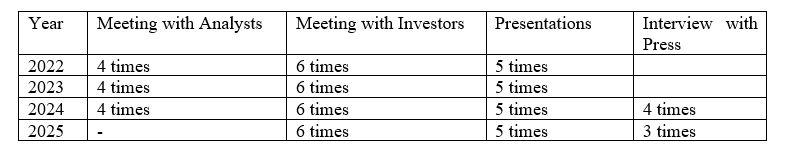
Mr. Khushroo Kali Wadia : Chief Executive Officer Telephone : +66 2 338 8111 E-mail : khushroowa@cn-thai.co.th Mr. Surasak Osathanugraha : Chief Financial Officer and Company Secretary Telephone : +66 2 338 8100 E-mail : surasakos@cn-thai.co.th Mr. Nattasan Kanoktadsakul: Senior Manager, Group Finance and Accounting and IR Telephone : +66 2 338 8077 E-mail : nattaska@cn-thai.co.th The Company participates in the investor relations activities held by SET called “Opportunity Day” quarterly, including interaction with press, which are attended by the Chief Financial Officer and Chief Operating Officer.
| https://cnt.listedcompany.com/misc/CG/20240315-cnt-cg-policy-manual-en.pdf |
Code of Conduct
Sub-Section Introduction
The Company has set up a code of ethics for Directors, management and employees as a guideline to carry out their respective work for the Company in a transparent, honest, faithful and justifiable manner.
Has a Business Code of Conduct
Yes
Code of Conduct Description
The following policies and practices are included in the Company’s business ethics and code of conduct manual.
• Policy on Compliance with the Law and Relevant Rules and Regulations
• Policy on Conflicts of Interest
• Policy on Confidentiality of Information
• Policy on Safeguarding Company Property
• Policy on Use of Computer and Information Technology Security
• Cyber Security Management
• Ethics for Intellectual Properties Rights
• Policy on Preventing Corruption and Offering a Bribe
• Policy on Giving and Accepting Gifts and excessive or undue Hospitality
• Tax Policy
• Anti-Money Laundering and Counter Terrorism Financing (AML/CTF)
• Antitrust Policy
• Procurement
• Transactions with Government
• Policy on Safety, Occupational Health and Environment
• Diversity and Inclusion Policy
• Whistleblowing Policy
• Policy and Practices toward Stakeholders
The business ethics and code of conduct manual is provided to all management, and employees and posted on the Company’s website.
Guidelines and enforcement of Corporate Governance Policy, Business Ethics and Code of ConductThe Board of Directors defines the duties and responsibilities for the Directors, management, and employees to acknowledge and comply with the policies and terms indicated in the Company’s corporate governance policy and business ethics and code of conduct. Moreover, the Company has put in place a whistleblowing policy and the internal audit processes as mechanisms to monitor compliance to assure that all operations abide by such policy and principles. If the Directors, management, and employees violate these principles, they will face strict disciplinary punishment.
Code of Conduct Practices
| Guideline | Other — Please Specify | Detail | Document Link | Page Number in Report |
|---|---|---|---|---|
| Prevention of Misuse of Inside Information | Conflict of Interest Policy The Board of Directors and the Audit and Corporate Governance Committee have established a comprehensive policy governing the review and approval of transactions that may involve conflicts of interest. The Company has adopted a conflict of interest policy applicable to directors, executives, and employees to prevent situations that could influence decision-making or adversely affect the Company’s interests. The key practices under this policy include the following:
These measures are designed to ensure transparency, fairness, and accountability in decision-making, to prevent conflicts of interest, and to safeguard the best interests of the Company, its shareholders, and stakeholders in accordance with good corporate governance principles. Measures for the Prevention of Conflicts of InterestThe Company has established measures to prevent and control conflicts of interest applicable to directors, executives, and employees, with the objective of ensuring that decision-making at all levels is conducted transparently, is subject to appropriate oversight, and is made in the best interests of the Company. Disclosure of Interests by Directors and Executives
Non-Participation in the Decision-Making Process
Reporting of Interests by Directors and Executives
Reporting by Executives and Employees
Potential conflict of interest transactions Transactions That May Give Rise to Conflicts of Interest The Board of Directors is fully aware of transactions that may give rise to conflicts of interest and connected transactions, and carefully considers the appropriateness of such transactions on each occasion. The Company strictly complies with the rules and regulations of the Stock Exchange of Thailand and the Securities and Exchange Commission, as well as the Company’s internal policies and guidelines. Transactions are conducted on an arm’s-length basis, with prices and terms comparable to those applied to third parties and in accordance with normal commercial practices. The Company has fully disclosed details of transaction values, counterparties, and the rationale or necessity for such transactions in the annual report. The Audit and Corporate Governance Committee, together with the Internal Audit Department, includes the review of transactions that may involve conflicts of interest as part of the annual internal audit plan. For the year 2025, the Internal Auditor reviewed such transactions and reported the results to the Audit and Corporate Governance Committee at its meeting No. 1/2026 held on 27 February 2026. The review concluded that the Company has appropriate approval policies in place to prevent conflicts of interest, and that the existing transactions were necessary for the Company’s business operations, conducted in accordance with normal commercial terms and market prices, and undertaken for the best interests of the Company. The related policies and disclosures have been adequately presented in the annual report. In addition, the Internal Audit Department reviewed the Company’s compliance with the Notification of the Board of Governors of the Stock Exchange of Thailand on Disclosure of Information and Other Acts of Listed Companies Concerning Connected Transactions B.E. 2546 (2003), as amended; the Notification of the Capital Market Supervisory Board No. TorJor. 21/2551 on Rules on Entering into Connected Transactions, as amended; as well as the circulars of the Securities and Exchange Commission providing guidance on compliance with Section 89/12 (1) of the Securities and Exchange Act (No. 4) B.E. 2551 (2008). Details of connected transactions are disclosed under Section 9.2 “Related Party Transactions” of the annual report. The results of the review were also reported to the Board of Directors at the Board meeting held on 27 February 2026, at which the Board reviewed and approved such transactions after considering the opinions and reports of the Audit and Corporate Governance Committee. | |||
| Anti-corruption | Anti-Corruption and Anti-BriberyPolicy on the Prevention of Corruption and Bribery The Company has established a clear policy prohibiting all forms of corruption and bribery, whether direct or indirect, across all business activities of the Company and its group companies. The Company adopts a zero-tolerance approach and does not accept or condone any conduct that constitutes corruption. Any violation of this policy is considered a serious offense and will be subject to disciplinary action, including termination of employment, in accordance with applicable laws. To reinforce its anti-corruption measures, the Company has adopted and implemented a “No Gift Policy” in line with the guidelines of the Thai Private Sector Collective Action Against Corruption (CAC). The Company requests cooperation from business partners to refrain from giving gifts to directors, executives, and employees at all levels on all occasions. Throughout 2025, the Company strictly complied with the No Gift Policy to reaffirm its commitment to good corporate governance and to promote an organizational culture of transparency, free from bribery and improper benefits. | |||
| Whistleblowing and Protection of Whistleblowers | Whistle-blowing Policy To ensure fair treatment for all stakeholders under the Code of Conduct, the Company has established a direct channel for contacting the Board of Directors (bypassing the management) to submit business suggestions, complaints, or recommendations. This channel is specifically intended for raising concerns about issues that may impact stakeholders, including potential risks arising from the Company’s operations or from wrongful actions, violations of the Code of Conduct, or other misconduct. It also covers special cases such as unethical or dishonest acts by management, breaches of the Code of Conduct, illegal activities, and similar matters. All employees and other stakeholders are encouraged to use this channel to report concerns. Messages can be sent via email or mailed to Mr. Kasemsit Pathomsak, Independent Director and Chairman of the Audit and Corporate Governance Committee, at the following address: By mail: Mr. Kasemsit Pathomsak Merchant Partners Securities Public Company Limited 2/F Charn Issara Tower 1, No. 942/81 Rama 4 Road, Suriyawong, Bangrak, Bangkok 10500 Thailand By e-mail: kasemsit@merchant.co.th The Complaint handling procedure When a complaint is filed or a whistle is blown, the Company will gather evidence, evaluate the situation, and formulate measures to address and mitigate any damages caused to the affected person(s), taking into account the overall impact. Subsequently, the individual responsible for the case will follow up on the outcomes of the remedial actions and report back to the relevant staff and the complainant. The results of the actions taken will then be reported to the Chairman of the Board of Directors, the Chairman of the Audit and Corporate Governance Committee, and/or all other relevant Directors, as appropriate, depending on the specifics of each case. Confidentiality The Company recognises that some individuals who observe a breach and wish to report it may seek to do so confidentially under this Policy. In principle, the Company will handle all reports confidentially and expects employees reporting a breach to maintain confidentiality as well. Confidentiality will be maintained to the fullest extent possible. Accordingly, the Company will protect the identity of any employee who discloses a breach in accordance with this Policy. However, the Company acknowledges that, in some circumstances, the investigation process may reach a stage where the employee who reported the breach is required to provide a statement or evidence. In such cases, where maintaining complete confidentiality would hinder the pursuit of the truth, the Company may not be able to guarantee absolute confidentiality to the reporting employee. Nevertheless, the Company will strive to maintain confidentiality as much as possible in these situations. Finally, the Company will not disclose an employee’s identity without their knowledge and consent. Protection of Whistleblower To protect the rights of whistleblowers, the Company will not disclose the name, address, photograph, or any other identifying information of the whistleblower or those involved in the investigation. Any whistleblower who, in good faith, reports a violation of the Code of Conduct, files a complaint, or raises concerns under the Whistleblowing Policy will not face harassment, retaliation, or adverse employment consequences as a result of their report. Individuals affected by any harm will be provided with appropriate and fair relief procedures. Employees who retaliate against someone who has reported a violation, complaint, or concern in good faith will be subject to disciplinary action, up to and including termination of employment. The complaint-handling procedure and guidelines for protecting whistleblowers are outlined in the “Business Ethics and Code of Conduct,” which has been communicated to all employees and is available on the Company’s website. Penalties for Offences Penalties for offences will be determined in accordance with the Company’s regulations and/or applicable laws. | |||
| Preventing the Misuse of Inside Information | Supervision of the use of Insider Information Christiani & Nielsen (Thai) Public Company Limited has a policy of disseminating all significant information (both financial and non-financial) to shareholders, investors and the general public on a timely basis. Strong internal controls are in place to ensure that information released is comprehensive and accurate. The Board is committed to comply with rules and regulations with regard to the disclosure of information in a timely manner with full transparency. The monitoring of the use of insider information of the Company is considered the responsibility of the Directors, management team who are obliged to strictly monitor and prevent any leaks of the Company’s confidential and privileged information including information not yet revealed to the public or any data that might affect the Company’s operations or share price. This includes the prohibition on use of Company’s information obtained from directorships or employment for personal benefit or conducting business or other activities in competition with the Company. The Company has determined it as policy and guideline in the Business Ethics and Code of Conduct Manual which is disclosed on the website of the Company under the subject of Corporate Governance. Pursuant to section 59 of the Securities and Exchange Act B.E. 2535, all Directors and management team members are required to report the changes in their shareholding to the company secretary and Office of the Securities and Exchange Commission within three (3) business days from the date of trading/transfer of the Company’s shares and/or other securities (as the case may be). Such reporting shall extend to any change in shareholding of any Director/Management Team member’s: (i) spouse, (ii) cohabiting partner, (iii) minor children, and (iv) any juristic person in which such Director/Management Team member holds more than 30% of the total voting rights of such juristic person (including that of his/her spouse, cohabiting partner and minor children), ((i) to (iv) referred to as "Relevant Persons"). The company secretary reports to the Board of Directors at the Board of Directors meetings every quarter on any changes in the shareholding of Board members and top executives. In accordance with the Company’s Corporate Governance policy, the Company does not allow the following persons to trade/transfer the Company’s shares/other securities (as the case may be) during the period of thirty (30) days before the quarterly reviewed results and annual audited results are announced and also within two (2) days after any notifications and also at least five (5) days before the Company makes any significant announcement: • All Directors and management team members (including their Relevant Persons); and • The Company’s personnel in the Group Finance & Accounts Departments and the Investor Relations Department who are close to the relevant inside information of the Company. The company secretary regularly notifies the above personnel of the silent period in advance by e-mail and monitors compliance therewith. According to the Company’s corporate governance policy, all Directors and management team members are encouraged to inform the Company their intention (including that of their Relevant Persons) to trade/transfer the Company shares/warrants (as the case may be) at least a day in advance. In addition to the above, the Company’s corporate governance policy sets out an investor relation policy which stipulates that for a period of two (2) weeks prior to the planned release of financial reports (known as the “silent” or “quiet” period), the spokesperson as a representative of the Company will not discuss matters related to the Company’s future financial performance or expectations with financial media, analysts and investors. During the year, the above policy has been fully complied with and no non-compliance cases have been observed. 2025 Insider Trading Prevention Training and Policy Acknowledgment SummaryTo uphold the principles of good corporate governance and prevent the misuse of confidential information for personal gain, the Company has implemented comprehensive measures to educate and ensure compliance across all levels of personnel. The results for the year 2025 are as follows:
Conclusion In summary, for the year 2025, a total of 853 personnel achieved 100% completion in policy acknowledgment and training regarding the prevention of insider trading. This outcome demonstrates the Company’s firm commitment to transparency and ethical business practices, fostering long-term trust among shareholders and stakeholders. | |||
| Giving or receiving gifts, entertainment, or business entertainment | The Company has officially announced its “No Gift Policy” by notifying all employees and requesting cooperation from the Company’s business partners to refrain from giving or receiving gifts, souvenirs, entertainment, or any other benefits on all occasions and during all festive seasons. The Company also promotes the idea of replacing gifts with well wishes. | |||
| Compliance with laws, rules and regulations | Review of Legal Compliance and Corporate Governance The Audit and Corporate Governance Committee reviews the Company’s operations to ensure compliance with the Securities and Exchange Act, regulations of the Securities and Exchange Commission (SEC), the requirements of the Stock Exchange of Thailand (SET), and other relevant laws governing the Company’s business operations. This includes monitoring contractual obligations that may arise from agreements with external parties. In addition, the Company places emphasis on adhering to the principles of good corporate governance and promoting the prevention of fraud and corruption. The Company has established appropriate and sufficient channels for receiving complaints from both internal and external stakeholders, along with a formal complaint handling system. This system fosters a culture of good governance, transparency, and accountability, while also providing measures to protect whistleblowers. | |||
| Use and maintenance of data and assets | Controlling System and Internal Audit The Company recognises the importance of internal control systems at an operational level to ensure that operations are conducted efficiently. The duties of operational and management-level personnel are clearly defined. A proper level of control is maintained over the utilisation of the Company’s property and assets to ensure their optimal use for the Company’s benefit. Additionally, there is a clear segregation of responsibilities among operational units, control units, and assessment units to maintain appropriate checks and balances. Moreover, an internal control system for the financial and accounting functions of the Company is clearly set up which allows adequate reporting to the relevant management. The Company has established an Internal Audit Department to ensure that key operations and financial activities are conducted efficiently in accordance with relevant guidelines and laws, while also conducting regular checks to verify compliance with applicable regulations, with internal auditors reporting directly to the Audit and Corporate Governance Committee to maintain the department's complete independence from management. Internal control systems for the financial and accounting functions of the Company are clearly set up which allows adequate reporting to the relevant managers to achieve the following objectives: 1. Efficient and effective operations, including skillful use of resources for the best benefit of the Company. 2. Accurate, reliable and prompt financial reporting. 3. Full compliance with the Company’s policies, laws and regulations. The Board of Directors also recognises the critical importance of risk management. It assumes direct responsibility for implementing risk management practices across all levels of the organisation. These practices aim to support the efficient and effective performance of the Company’s management and help achieve its business objectives. The Board has outlined the Company’s risk management and internal control policies on its website under the section on Corporate Governance Policy and in the “Internal Control” section of this Annual Report. The Company has also tasked the Internal Audit Department with reviewing and evaluating compliance issues within the organisation to mitigate legal risks and ensure that the Board of Directors, management, and employees comply with the rules and regulations of regulatory agencies, adhere to Company policies and procedures, and meet the Company’s Standards of Conduct. | |||
| Anti-competitive | The Company strives to conduct its business in an ethical and transparent manner. Corporate business strategies are performed based on fair trade and competition. One of the purposes of this policy is to promote compliance with antitrust laws applicable in countries where the Company operates. | https://cnt-th.listedcompany.com/misc/CG/20220323-cnt-business-ethics-en.pdf | 7 | |
| Cyber security | The Company places great importance on safeguarding all customer information against loss, misuse, unauthorized disclosure, alteration, or destruction. Communication channels have been established for customers to file complaints via telephone, email, and postal mail. The Company is committed to maintaining the confidentiality of customer information with transparency and accountability, ensuring the highest level of service. Over the past year, there have been no complaints related to such matters, nor has the Company been fined or penalized for any violations concerning the protection of customer confidentiality. At present, the Company has officially implemented a Personal Data Protection Policy along with stringent and appropriate control measures to ensure that all stakeholders, including customers, can have full confidence that their data will be securely protected, properly maintained, and used with integrity. | |||
| Environmental management | The Company recognizes that construction activities inherently generate various types of pollution that can impact the environment. Therefore, the Company has implemented a strict policy to control and minimize environmental impacts at all construction sites, with mandatory compliance across all units. This policy is accompanied by efforts to instill environmental awareness among employees, emphasizing the importance of sustainability. The Company also acknowledges the significance of sustainable resource utilization in its business operations—both directly and indirectly—including human resources, such as employees and suppliers, who procure construction materials derived from natural resources. The Company is committed to fostering the sustainability of the environment, communities, and societies in which it operates. Accordingly, the management prioritizes the development, support, and preservation of resources, environmental quality, and surrounding communities, in alignment with its corporate governance policy. The Company believes that success across all operational dimensions contributes to long-term sustainability for society, the environment, and communities, while also supporting the achievement of its corporate mission. | |||
| Human rights | Policy and Practice on Human Rights The Company mandates that all directors, executives, and employees strictly adhere to human rights principles. The Company also provides knowledge and understanding of international human rights standards to employees, integrating these into its operations. The Company's recruitment policy is guided by ethical principles, emphasizing diversity and equality. Discrimination based on race, religion, color, or gender is prohibited. Furthermore, child labor and illegal labor practices are strictly disallowed. These principles also extend to all subcontractors working with the Company. Equal Employment Opportunities and Support for People with Disabilities The Company provides equal opportunities for all individuals to be selected as employees, focusing on knowledge, skills, and suitability for the position. The Company also promotes and supports equal opportunities for persons with disabilities, such as hiring individuals with disabilities and preparing accessibility facilities at the Head Office, including elevators, ramps for wheelchairs, and restrooms for the disabled. | |||
| Occupational health and safety | Occupational Health and Safety The Company places great importance on the health and well-being of its employees and is committed to promoting safety in the workplace to prevent accidents, injuries, illnesses, and operational losses. To this end, the Company has established comprehensive measures, guidelines, and operational procedures to ensure safety at every stage of its operations, strictly in accordance with applicable occupational health and safety laws. Emphasizing the health and lives of its employees as a top priority, the Company has implemented the ISO 45001:2018 Occupational Health and Safety Management System with the following objectives: • To reduce work-related illnesses and injuries, including fatalities; • To develop and implement the requirements and objectives of the occupational health and safety management system; • To demonstrate leadership and commitment through the implementation of the system; • To eliminate risks associated with occupational health and safety management. The Company considers its safety policy to be of utmost importance and mandates strict adherence from all departments. It is the duty of every employee to ensure the health and safety of both themselves and others involved in their work. All employees are required to fully cooperate with the Company in fulfilling the safety responsibilities assigned to them. | |||
| Other guidelines related to business code of conduct | Ethics for Intellectual Property Rights | The Company requires that all of its Directors, management, and employees strictly respect the intellectual property rights of others, whether in relation to trademarks, patents, copyrights, classified commercial information, or other stipulated categories of intellectual property, such as using only licensed software that has been inspected and installed by the Company’s information technology department, and encourages all employees to ensure that the application of research findings or other data in their work does not constitute a violation of other people’s intellectual property rights. In 2025, the Company did not receive any complaints for the violation of intellectual property rights. |
Promoting Compliance with the Code of Conduct
Promotes Compliance by Directors, Executives and Employees
Yes
Description
At the 1st/2025 meeting of the Audit and Governance Committee on 28 February 2025, the ethics handbook and guidelines, as well as the anti-corruption policy, were reviewed. It was found that the handbook, guidelines, and anti-corruption policy remain consistent with relevant regulations and are appropriate for the current situation.
This manual and anti-corruption policy are also made as a compulsory training course in the E-Learning System and required that management and employees shall log in the system to learn and pass the test. In the past year, 2024, 100% of the trainees in the program met the required assessment criteria.
Anti-Corruption Networks & Projects
Joined or Declared Intent to Join Anti-Corruption Networks
Yes
Networks & Projects Joined
| Network / Project | CAC Certified |
|---|---|
| Thai Private Sector Collective Action Against Corruption: CAC | N |
| United Nations Global Compact (UNGC) | |
| Participation of anti-Corruption networks and initiatives |
Material Changes & Developments in CG
Reviewed the CG Policy or Board Charter in the Past Year
Yes
Material Changes or Developments in the Past Year
No
Policy Review — Description
The Board of Directors regularly reviews and updates the Company’s corporate governance policy to ensure that it reflects the latest best practices and standards. During 2024 to early 2025, the following significant activities related to the review of its corporate governance policy, guidelines and system were carried out by the Board, as detailed below:
• Reviewed the Company’s corporate governance policy which covers the duties and obligations of the Board of Directors and Committees.
• Combined the Nomination Committee and Remuneration Committee and re-designed as “The Nomination and Remuneration Committee”.
• Reviewed the board diversity policy, the board skill matrix, and the succession plan policy.
• Reviewed the business ethics and code of conduct manual, the anti-corruption policy, the sustainability policy and risk management policy.
Implements the CG Code for Listed Companies
No
CG Code — Description
At the Board of Directors’ meeting held on 13 November 2025, the Board considered the Corporate Governance Code for Listed Companies (CG Code 2017) issued by the Securities and Exchange Commission, together with the Guidelines for Good Corporate Governance (2012) of the Stock Exchange of Thailand. The Board also conducted a Corporate Governance Self-Assessment in accordance with the assessment framework prescribed by the Stock Exchange of Thailand and the Thai Institute of Directors (IOD).
The overall assessment result was rated at a “Excellent” level. The Board of Directors resolved to utilize the findings and recommendations from the assessment to further enhance and continuously improve the Company’s corporate governance practices. The Board has also set a policy to conduct the CG Self-Assessment on a regular basis, with the next assessment scheduled for 2027.
CG Code Principles Not Fully Implemented in 2025
The following principles of the Corporate Governance Code for Listed Companies (CG Code 2017) were not fully implemented by the Company in 2025:
Limitation of Independent Directors’ Tenure to Not More Than 9 Years
Under the CG Code 2017, it is recommended that the tenure of an independent director should not exceed nine (9) years. However, the Company was not able to fully comply with this recommendation in 2025 due to constraints in sourcing suitably qualified candidates with the appropriate knowledge, expertise, and industry experience.
Opinion of the Board of Directors
The Board of Directors carefully considers the independence of independent directors whose tenure has reached or exceeded the recommended period and proposes such appointments for shareholders’ approval at the shareholders’ meeting. In doing so, the Board takes into account the appropriateness, competence, and continuity of effective corporate governance oversight.
Declaration of Intent to Join the Thai Private Sector Collective Action Against Corruption (CAC)
The Company was not able to formally declare its intent to apply for CAC certification during 2025.
Opinion of the Board of Directors
The Board of Directors remains committed to declaring its intent and proceeding toward CAC membership and certification as soon as practicable. In the meantime, the Company has already implemented several practices in line with CAC guidelines, including the enforcement of an Anti-Corruption Policy, the adoption of a No Gift Policy signed by the Chief Executive Officer, and comprehensive communication of such policies to employees and business partners.
Overall Summary
The Company remains firmly committed to the continuous implementation of the CG Code. Although certain recommendations could not yet be fully implemented, the Company has established long-term development plans to progressively align its corporate governance practices with best practices in accordance with the standards and guidance of the Securities and Exchange Commission and the Stock Exchange of Thailand.
Other CG Performance & Outcomes
The Company continuously operates in accordance with the principles of good corporate governance, recognizing its responsibilities toward shareholders and all stakeholder groups. As a result, the Company has consistently received strong governance assessment results in both listed company corporate governance and shareholders’ meeting practices, as summarized below:
Corporate Governance Rating (CGR) of Thai Listed Companies
The Company has received an “Excellent” CGR rating from the Thai Institute of Directors (IOD) for eight consecutive years, from 2018 to 2025. This achievement reflects the Company’s strong commitment to good corporate governance practices characterized by transparency, accountability, and responsible management.
Assessment of the Quality of Annual General Meetings of Shareholders
The Company was awarded a full score of 100 points for the quality of its Annual General Meetings of Shareholders by the Thai Investors Association for seven years, namely 2017 and 2020-2025. This result demonstrates that the Company’s shareholders’ meetings are conducted in a transparent, equitable, and standards-compliant manner.
Assessment by the National Anti-Corruption Commission (NACC)
In fiscal year 2025, the Company passed the Integrity and Transparency Assessment of Government Contractors (ITAGC) conducted by the National Anti-Corruption Commission (NACC), as a private sector entity contracting with government agencies.
These assessment results underscore the Company’s strong adherence to good corporate governance principles, transparent and auditable management practices, and its ongoing commitment to continuous organizational development. Such efforts aim to enhance confidence among shareholders and all stakeholders over the long term.